
ggggggggggggggg
fgfgdf
In the growing market of drone delivery, DJI has not been left behind. In less than three years, the company has gone from its first dedicated 30kg cargo drone to the latest one that lifts 200 kg on its own and can also simultaneously coordinate with up to four other drones to lift more weight (600kg). That trajectory says a lot about where industrial logistics is heading, and the DJI FlyCart 200 is the clearest signal yet.

Unveiled quietly on DJI’s Chinese website in April 2026 alongside the companion agricultural drone DJI T200, the FlyCart 200 is DJI’s most capable delivery platform to date. The Flycart 200 will be available for the Chinese market and no global launch timeline has been announced yet, but the hardware and features tell a compelling story about what the company believes the next phase of heavy-lift drone operations looks like: modular, scalable, and built for fleet thinking.
A Brief History of The DJI Flycart Series
DJI first introduced the FlyCart series with the FlyCart 30 in China in August 2023, followed by a global release in January 2024. The FlyCart 30 can carry 30 kilograms for 16 kilometres on dual batteries, or push that ceiling to 40 kilograms on a single battery in an emergency configuration. It supported both cargo mode and winch mode, the latter allowing deliveries to locations where landing wasn’t possible. It offered IP55 weather resistance, an ADS-B receiver for crewed aircraft awareness, radar and binocular vision obstacle sensing, and a built-in parachute feature that signalled DJI was serious about operating in real-world, unpredictable environments rather than controlled test corridors.
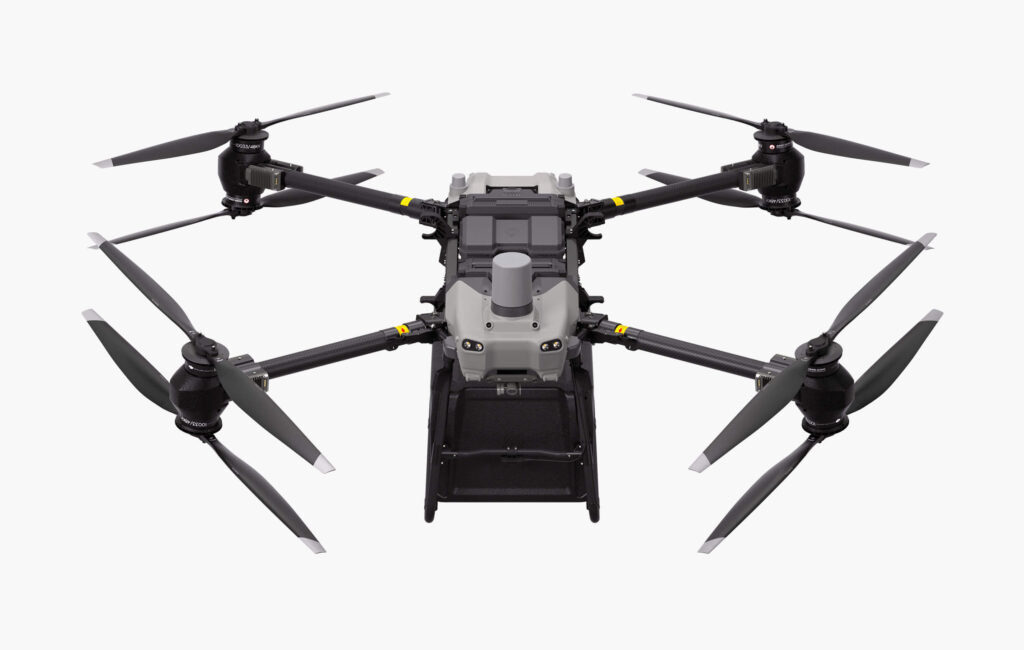
By June 2025, DJI was already bringing something better. The FlyCart 100 was certified alongside the Agras T100 and it was officially launched globally in December 2025. It carried a headline payload of 80 to 100 kilograms, depending on the battery configuration. The FlyCart 100 was coming in with better features than its predecessor. It introduced LiDAR terrain mapping, a five-direction vision array, 62-inch carbon fibre propellers, ultra-fast charging capable of replenishing batteries in under 20 minutes, and a hot-swappable dual-battery system. Its winch system gained an electric hook, a 30-metre cable, and a retraction speed of 1.2 metres per second.
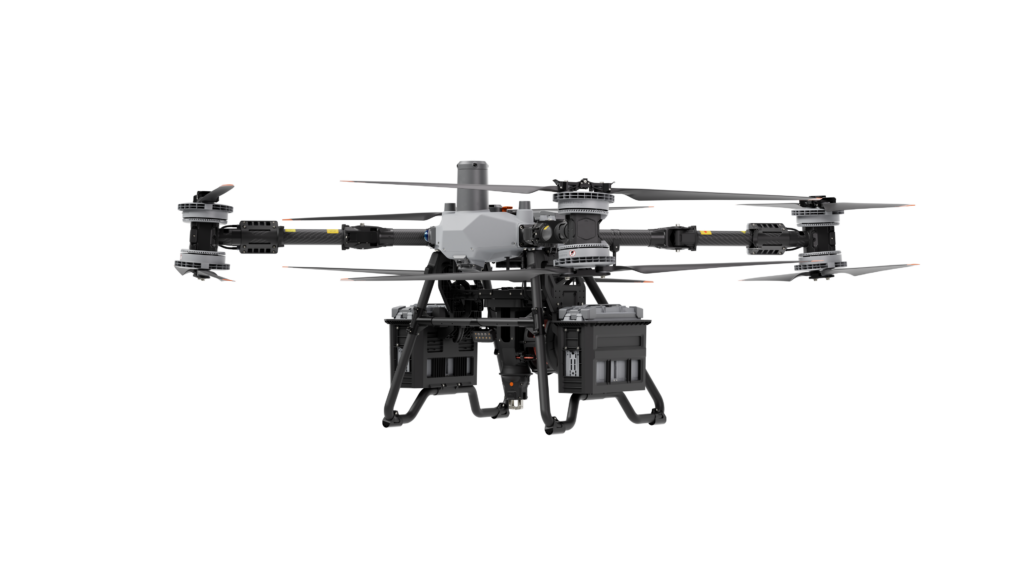
Less than five months after the FlyCart 100’s global debut, the FlyCart 200 arrived in China, for now. It was unveiled in April 2026 and it is coming in with a doubled payload than its predecessor and more improved features.
What the FlyCart 200 Is Built to Do
The FlyCart 200 is not simply a bigger FlyCart 100. It represents a philosophical shift in how DJI thinks about heavy cargo transport.
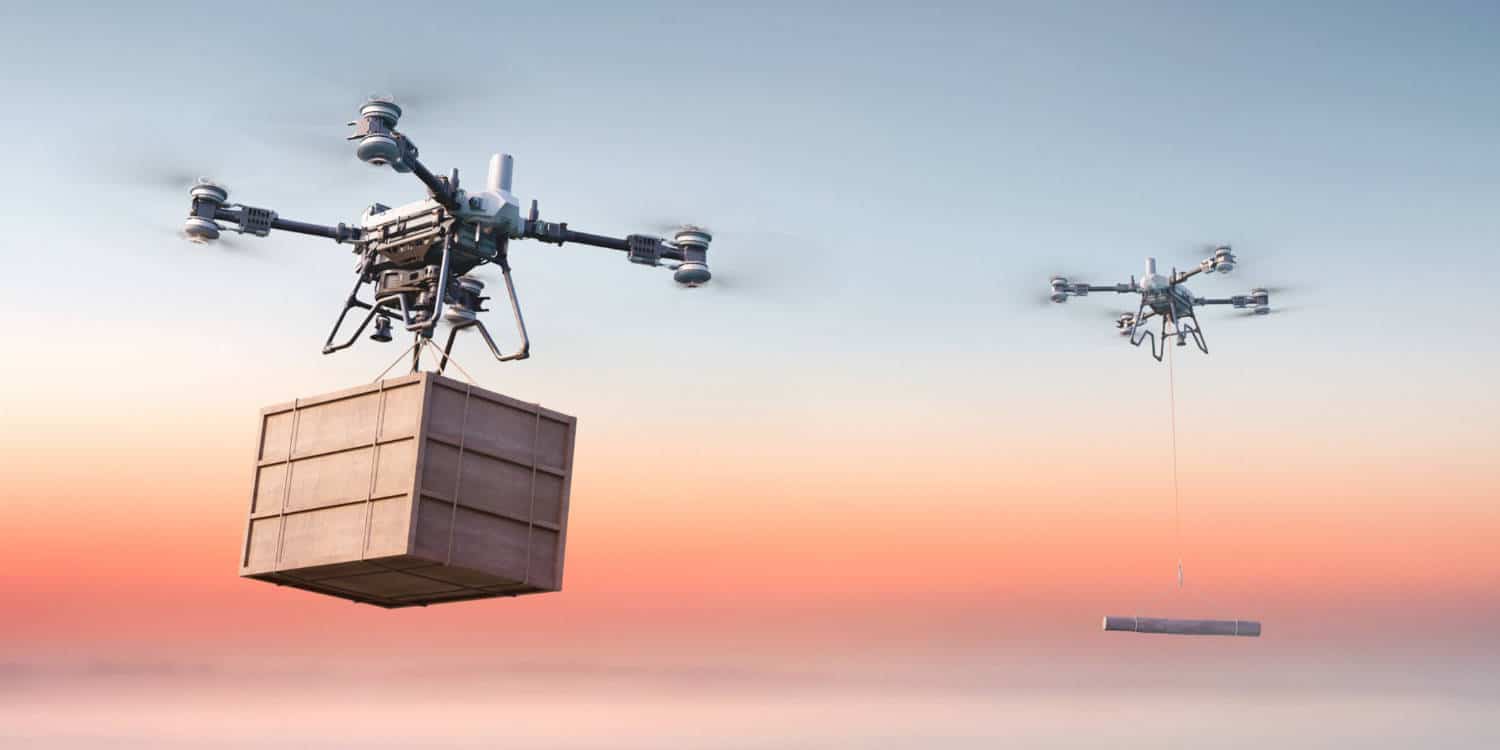
At its core, both the FlyCart 200 and its agricultural counterpart, Agras T200, share the same airframe and power system, supporting up to four batteries simultaneously. The key distinction is that operationally, the Fly Cart 200 can support coordinated lifting with both dual and quad drone configurations, allowing for increased payloads. In quad-drone mode, a coordinated swarm of FlyCart 200s can collectively manage loads far beyond what any single aircraft is rated for independently.
The T200 is limited to dual drone coordination, limited to a combined payload of 360 kgs and is limited to agricultural workflows, whilst the FlyCart 200 is a multi-role industrial platform. The FlyCart 200 supports a broader ecosystem of accessories and payloads, including compatibility with DJI’s Zenmuse H30 Series camera and S1 spotlight, suggesting use cases that extend beyond pure cargo delivery into inspection, monitoring, and emergency response.
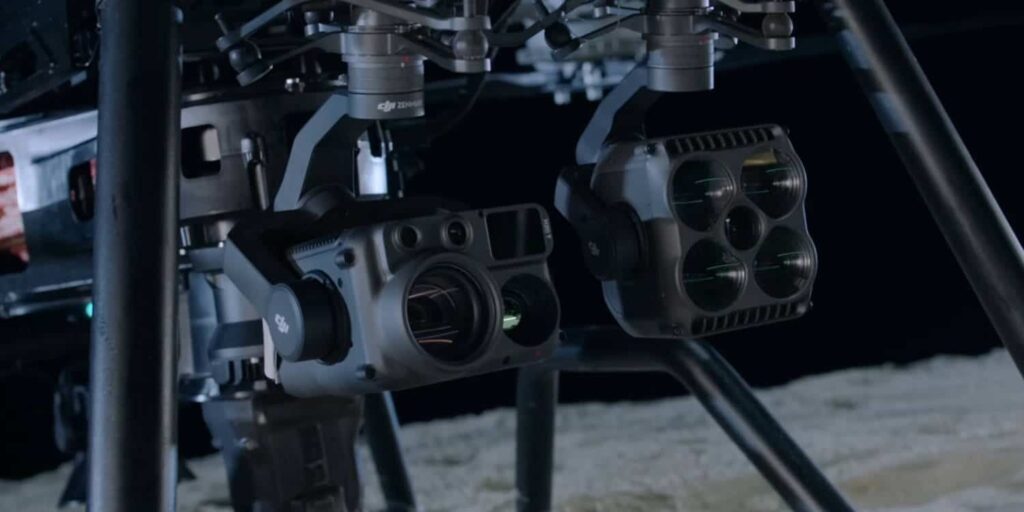
DJI’s choice to standardise hardware for the FlyCart 200 and T200 shows a design philosophy focusing on software, accessories, and operational settings instead of the machine itself. This modular system provides predictability for users and lets DJI improve software without creating new aircraft for different applications.
The FlyCart has some of these important features:
| Maximum payload (single unit): 200 kg (~440 lbs) |
| Dual-drone collaborative payload: up to 360 kg (~794 lbs) |
| Maximum flight range (no load): ~36 km (~22 mi) |
| 04 transmission system with long-range, stable connectivity (40km) ~25 mi) |
| 11-sensor intelligent safety system for complex environments |
| Dual PSDK interfaces for payload expansion |
Why Swarm Control Changes the Calculus
Multi-drone coordinated lifting is now available on a commercial platform with DJI’s FlyCart 200, offering a new solution in the industrial sector. Traditionally, heavy-lift tasks used larger single aircraft, each with unique maintenance needs and regulations. The FlyCart 200’s model allows four drones to work together, providing redundancy; if one drone has a fault, the load can still be safely managed. This approach also allows operators to adjust the fleet according to mission needs instead of relying on one large drone. Logistics companies can use FlyCart 200s for various load capacities, handling different missions efficiently with the same aircraft.
Use Cases: Where the FlyCart 200 Fits
The specifications and design choices of the FlyCart 200 point toward a specific set of deployment environments and use cases, but are not limited to:
Remote and emergency supply chains: The same logic that sent the FlyCart 30 to Mt Everest applies here, but on a much larger scale. After a disaster such as an earthquake, wildfire, or flood, road access is often compromised, making deliveries of emergency supplies difficult. The FlyCart 200 on a single coordination or multiple coordinated aircraft can move more payload, providing a level of response capability that would previously have required helicopters.
Industrial construction and infrastructure: Large construction projects in hard-to-reach places often require materials to be moved to areas difficult for vehicles to access. The FlyCart 200 is designed for transporting tools, structural components, safety equipment, and consumables.
Large-scale agricultural logistics: While the T200 variant handles the dedicated agriculture use case, there is significant overlap. Seed, fertiliser, harvested product, and replacement parts for field equipment are all realistic payloads for a 200-kilogram platform operating across large landholdings.
Offshore and maritime operations: Shore-to-ship and platform supply operations have been successfully demonstrated with the FlyCart 30. The FlyCart 200, with a 200-kilogram payload, enables more substantial supply runs to offshore rigs and vessels.
The Global Picture: China First, World Watching
The FlyCart 200 was released in China without a global launch date. DJI often certifies products domestically first, then explores international regulations before a wider release.
The regulatory environment for heavy-lift drones varies considerably by country. In some areas of Europe, Africa and parts of Asia, the pathway is more open, but each market often requires its own certification work. Operators in these regions would do well to closely track the FlyCart 200’s regulatory progress.
For markets where DJI products remain accessible, the FlyCart 200 is likely to generate serious interest from logistics operators, emergency services, and government agencies looking to expand aerial delivery capabilities. The combination of a 200-kilogram single-drone payload and scalable multi-drone coordination puts it in a category of its own among commercially available platforms.
What Comes Next
The FlyCart 200 is being launched at a critical time as the drone delivery industry has progressed to early commercial use. The focus has shifted to whether drone fleets can operate effectively in real supply chains. The FlyCart 200 offers swarm coordination and a standardized platform, addressing this need.
However, it is unclear how fast global regulations will adapt to large-scale, coordinated drone operations, as many aviation authorities are still developing necessary protocols. DJI has a history of working with regulators and the FlyCart series has demonstrated safety in various situations.
The company has learned that operational support is as important as the aircraft itself from the FlyCart 30 and 100. The DJI DeliveryHub, introduced with the FlyCart 100, is a cloud-connected platform for route planning, real-time monitoring, and team management, showing that DJI offers a logistics system, not just a drone.
The DJI FlyCart 200 was unveiled in April 2026 on DJI’s Chinese website. No global release date has been announced at the time of publication. Specifications are based on publicly available information from DJI and industry sources.